
Original research
Account suspension notice and evidence benchmark 2026
An editorial taxonomy of the platform routes, notice patterns and evidence functions covered by AccountSuspension.com. It measures our published corpus, not customer outcomes.
Executive findings
A suspension response is strongest when the notice, route and evidence are classified before writing.
Our content corpus separates reinstatement from held-funds support and maps platform-specific facts to a small, reusable evidence framework. The counts below are a reproducible inventory of this website on the publication date.
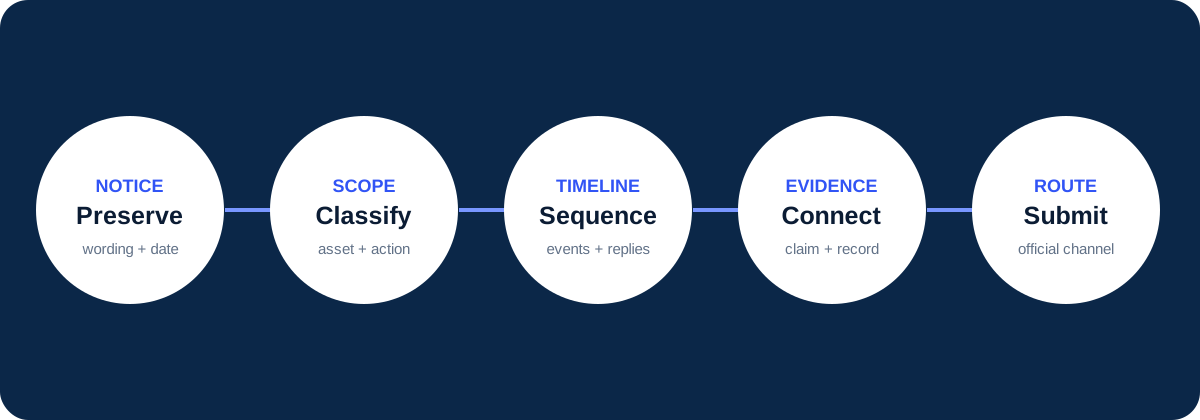
Scope boundary: This report does not estimate success rates, platform review times, market share or legal outcomes. It reports the structure of our own published guidance so every finding can be checked against the linked service, guide and methodology pages.
Notice taxonomy
Four questions organize most account-action notices.
The labels used by platforms vary. Classification reduces the risk of responding to the wrong issue or using the wrong route.
What changed?
Separate a full termination from a feature restriction, payment hold, listing removal, verification review or temporary limitation.
What issue is stated?
Preserve the exact policy, transaction, content, performance, security or identity concern named in the notice.
What response is offered?
Use the authenticated appeal, verification, support or resolution path actually shown for that account and region.
What limits apply?
Record deadlines, appeal limits, requested formats and any instruction not to create duplicate cases.
Evidence model
Five evidence functions make a response reviewable.
Each document should perform a clear function. More files do not automatically create a stronger submission.
FunctionQuestionTypical recordQuality test
IdentityWho controls the account?Requested identity or business recordsCurrent and consistent
TimelineWhat happened when?Dated notices, changes and submissionsComplete chronology
TransactionWhat activity is disputed?Orders, fulfilment, billing or rights recordsTraceable identifiers
CorrectionWhat is fixed?Implemented process or security changesCompleted, not promised
PreventionWhy will it not recur?Named control, owner and monitoring stepSpecific and testable
Reproducibility: Review the research methodology, evidence framework, service directory and guide library. Corpus totals were generated from the files present on August 23, 2026.
Use the benchmark
Move from research to a specific next step.
Classify a notice, check preparation gaps, or explore one of the four priority platform clusters.
Notice pattern library
Filter common notice patterns by enforcement family and identify the first record to preserve.
Open notice library →Appeal readiness checker
Use a private browser-based checklist. Inputs stay in the page and are not submitted.
Check readiness →Four resource clusters
Explore Amazon, PayPal, YouTube and Etsy service, evidence and official-route resources.
View resource clusters →
Topic Authority Index
Related Search Topics & Appeal Inquiries for Account Reinstatement
Explore high-intent search queries, policy compliance classifications, and structured reinstatement topics related to this guide. Click any topic to access dedicated case resources.